
Commercial vegetable peeling machine sizing: 300-800 kg/h models compared on mechanism, kg/h per kW, steel grade, footprint and washdown cleaning.
A commercial vegetable peeling machine removes skin from root vegetables by friction, and in the Huayi Equipment range that covers 300–800 kg/h at 0.75–1.5 kW: the DXC-1000 (300–400 kg/h, 1.5 kW, 1300 × 680 × 1000 mm, SUS304 with nylon brushes), the DXC-1500 (600–800 kg/h, 1.5 kW, 1800 × 680 × 1000 mm, horizontal brush drum), the TY-1000 (500–800 kg/h, 1.1 kW, 1200 × 680 × 980 mm, SUS201 with abrasive brushes), the BB-450 (500–750 kg/h, 1.1 kW, 600 × 810 × 1260 mm, SUS304 friction drum), and the BB-XP (10 kg/min, about 600 kg/h, 0.75 kW, 1260 × 800 × 1350 mm, batch drum). This guide is for buyers sizing a peeling station in a central kitchen, a fresh-cut plant, or a ready-meal line.
Key Takeaways
- Published capacity is a best-case figure measured on clean product. The number that decides the purchase is kg/h on your own raw material at your soil load, so run 10 kg of your own product through a trial machine before the order is confirmed.
- Mechanism matters more than capacity. Nylon brush, horizontal brush drum, abrasive brush, friction drum and batch drum each remove skin differently, and the difference shows up in peel loss and in damaged product rather than in the specification sheet.
- Steel grade decides service life in a washdown room. The BB-450, DXC-1000 and DXC-1500 are SUS304; the TY-1000 is SUS201; the BB-XP specification table lists no grade at all, so the nameplate has to be asked for.
- All five run on 380 V three-phase. The DXC-1500 product page title carries 15 kW while its own specification table carries 1.5 kW — confirm the nameplate rating before the balance payment is released.
- Footprint per 100 kg/h differs about threefold across the range: 0.078 m² for the BB-450 against 0.253 m² for the DXC-1000, before any infeed or outfeed table is drawn.
- Water consumption, brush life and peel-loss percentage are not published for any of these models. All three are quote items, and together they set the operating cost of the station.
- A peeling station only delivers what the washer upstream and the cutter downstream can absorb. A peeler that outruns the dewatering step produces a queue at the end of the line, not extra capacity.
What This Equipment Is Used For
Peeling sits between washing and cutting, and in a fresh-cut line it is the station that removes the last of the soil and the outer skin before the product is portioned or packed. The material it handles is firm and root-like: potatoes, carrots, beets, sweet potatoes, yams, ginger, lotus root and taro. That product range is what separates a peeler from a general washing drum, and it is why the machine is built around a brush or a friction surface rather than around water alone.
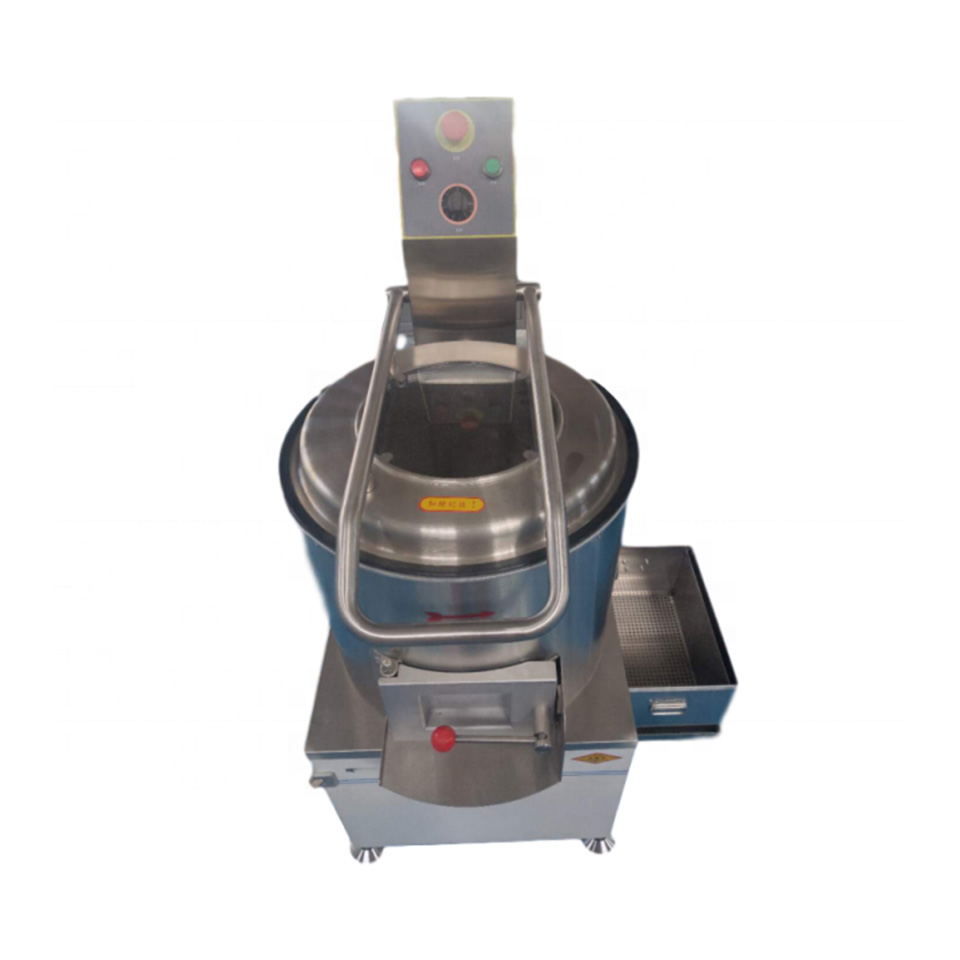
Skin removal by friction is a controlled abrasion problem. A nylon brush on the DXC-1000 cleans the surface without cutting into the flesh, which is what a washed salad line needs on potatoes and beets where the skin is thin. An abrasive brush on the TY-1000 takes more skin off per pass, which suits carrots and ginger going into a frozen or diced process. A friction drum on the BB-450 rubs product against the drum wall under a controlled load, and a batch drum on the BB-XP tumbles a measured charge of 10 kg per cycle. In practice the same plant may need two of these, because washed salad and peeled-and-diced frozen vegetable are different products with different peel-loss targets.
Three jobs sit outside the peeling machine but inside the same station: inspection before the drum, so a stone or a fork does not go in; the discharge and washing step that carries the peel away; and the sizing step after the drum, since a peeler does not grade. A buyer who treats peeling as a standalone machine ends up with a station that cannot grade and cannot dewater, and those two functions are where the real bottleneck in a fresh-cut line usually sits.
Core Specifications Buyers Should Compare
| Model | Peeling mechanism | Published output | Motor | Voltage | Dimensions (mm) | Net weight | Food-contact material |
|---|---|---|---|---|---|---|---|
| DXC-1000 | Nylon brush | 300–400 kg/h | 1.5 kW | 380 V | 1300 × 680 × 1000 | 180 kg | SUS304 + nylon |
| DXC-1500 | Horizontal brush drum | 600–800 kg/h | 1.5 kW | 380 V | 1800 × 680 × 1000 | 240 kg | SUS304 + brush |
| TY-1000 | Abrasive brush | 500–800 kg/h | 1.1 kW | 380 V / 50 Hz | 1200 × 680 × 980 | 110 kg | SUS201 |
| BB-450 | Friction drum | 500–750 kg/h | 1.1 kW | 380 V / 50 Hz | 600 × 810 × 1260 | 115 kg | SUS304 |
| BB-XP | Batch drum, 10 kg/cycle | 10 kg/min (about 600 kg/h) | 0.75 kW | 380 V | 1260 × 800 × 1350 | 95 kg | Grade not stated — confirm |
Two figures in that table deserve a second look. The DXC-1000 and DXC-1500 pages carry the same brush mechanism in a different frame length, which is why the DXC-1500 is 1800 mm long against 1300 mm and weighs 240 kg against 180 kg for the same 1.5 kW motor. And the BB-XP inlet is listed at 300 × 340 × 160 mm, which is the real limit on what can be loaded by hand in one cycle.
Compare the Five Mechanisms Before Comparing Capacity
Capacity is the number on the quotation, and mechanism is the number that decides whether the line runs. A nylon brush removes dirt and the thinnest skin without touching the flesh, so peel loss on a washed salad line stays low and the product survives the drum. An abrasive brush removes more per pass and saves a second pass on carrots, but it costs yield on potatoes. Friction peeling depends on the charge sitting against the drum wall for long enough, which is why load size and rotation speed have to be set per product rather than per machine.
That last point is the one buyers miss. A friction or abrasive machine tuned for potatoes will over-abrade carrots, and the same machine tuned for carrots will leave skin patches on potatoes. The machine is not the specification; the machine plus the brush type plus the product is. Ask the supplier to confirm which brush or abrasive grade is fitted for the product you are actually processing, and ask for the replacement part number so the second run a year from now is not a guess.
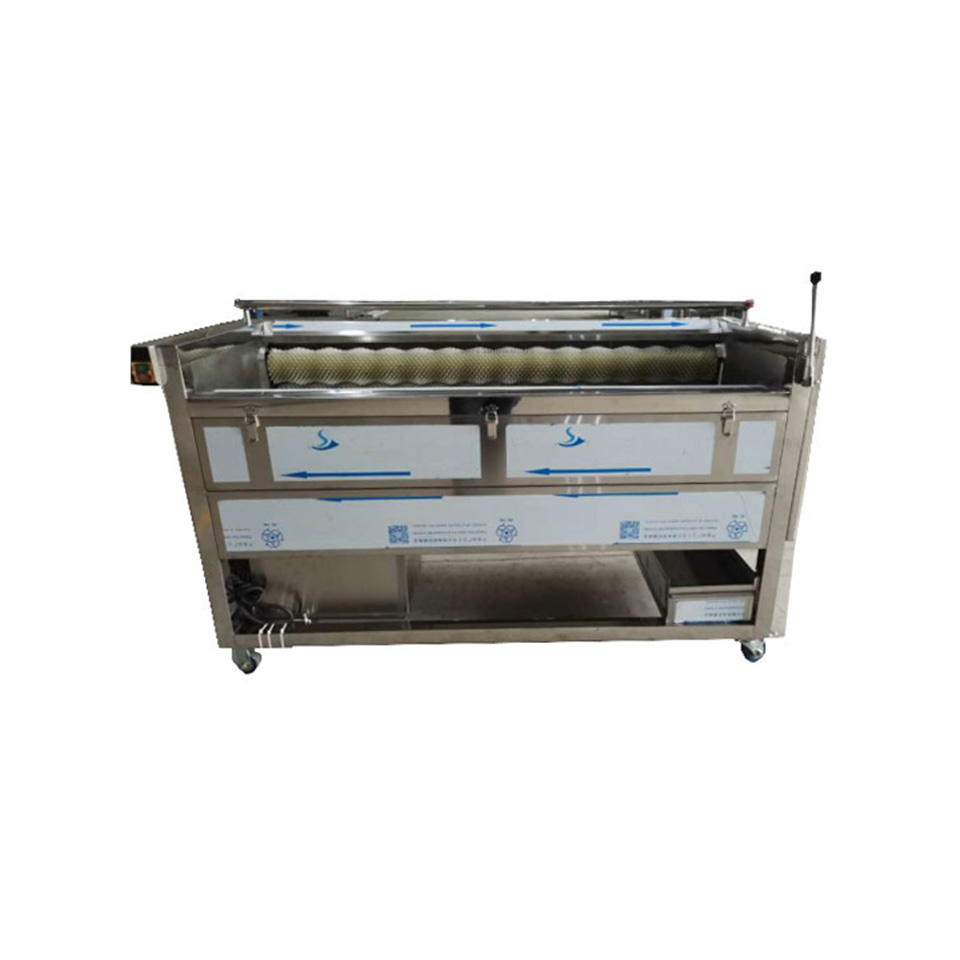
In practice the fit goes like this. The DXC-1000 at 300–400 kg/h is a compact nylon-brush unit for a small fresh-cut line or a canteen kitchen producing washed salad. The DXC-1500 at 600–800 kg/h is the same idea built as a horizontal brush drum for a factory line, and its 1800 mm length has to be drawn into the layout. The TY-1000 at 500–800 kg/h covers the middle of the range on an abrasive brush at 1.1 kW. The BB-450 at 500–750 kg/h is the most compact unit in the range at 0.486 m² of footprint. The BB-XP runs on batch cycles of 10 kg, which suits a kitchen that handles smaller lots and wants a measured charge each time.
Convert kg/h Into Line Hours and Net Yield
Two conversions are worth doing before the order, and both take five minutes. The first is shift output: multiply published kg/h by the hours the station runs, then apply your own utilisation factor. The second is net yield, which subtracts the peel and the soil that leave as waste. Published output assumes fresh, well-soaked product and continuous feed, so an 85% utilisation and a 5% peel loss are placeholders to replace with your own figures.
| Model | Peak output | Over an 8 h shift at 85% | Finished product at 5% peel loss | kg/h per kW | Footprint | m² per 100 kg/h |
|---|---|---|---|---|---|---|
| DXC-1000 | 400 kg/h | 2720 kg | 2584 kg | 200–267 | 0.884 m² | 0.253 |
| DXC-1500 | 800 kg/h | 5440 kg | 5168 kg | 400–533 | 1.224 m² | 0.175 |
| TY-1000 | 800 kg/h | 5440 kg | 5168 kg | 455–727 | 0.816 m² | 0.126 |
| BB-450 | 750 kg/h | 5100 kg | 4845 kg | 455–682 | 0.486 m² | 0.078 |
| BB-XP | 600 kg/h | 4080 kg | 3876 kg | 800 | 1.008 m² | 0.168 |
The kg/h per kW column is the honest efficiency comparison, and it changes the ranking. The BB-XP returns the most kilograms per kilowatt at 800, the TY-1000 and BB-450 sit near 455–727, and the DXC-1000 is the least efficient at 200–267 — but that is the price of the gentlest brush in the range, and it is the right trade when the customer is buying appearance of a washed salad. Buying on kW efficiency alone is how a plant ends up with a machine that damages the product it was bought to protect.
Match Steel Grade and Frame to the Washdown Regime
SUS304 and SUS201 differ in nickel content and that difference shows up as corrosion resistance in a wet room: SUS304 carries roughly 8–10.5% nickel against 3.5–5.5% in SUS201, and it resists chloride attack from chlorinated sanitiser and from soil carried in on root vegetables. The DXC-1000, DXC-1500 and BB-450 are SUS304. The TY-1000 is SUS201, and at 500–800 kg/h and 1.1 kW it is the most economical unit per kilowatt in the range — which is exactly why it needs a written grade decision on the purchase order, because a SUS201 frame in a line that is washed with chlorinated sanitiser twice a shift will show pitting at the weld and drum base sooner than the rest of the line does.
The BB-XP specification table on the site lists the frame as stainless steel without a grade, and its product page carries a note that the frequency parameter was not provided and was retained as published. Ask for the nameplate photograph and the material certificate before the order, and write the grade you need into the purchase order rather than accepting whatever ships. EN 10088-1 is the reference for grade designations, and GB 4806.9-2016 is the Chinese standard for food contact metallic materials and migration limits.
Frame weight is the other quiet number. The DXC-1500 at 240 kg and the DXC-1000 at 180 kg sit on the floor of a processing room where a forklift is available; the BB-450 at 115 kg and the TY-1000 at 110 kg can be moved by two people. Weight matters when the machine has to be repositioned for cleaning between products, and it matters more when a unit is being craned through a hatch or onto a mezzanine. If the machine is going to be moved, specify the floor loading and the lifting points rather than assuming.
How to Choose the Right Model
Production Capacity
Capacity on a peeler is set by the feed, not by the drum. Work out how many kilograms of unpeeled product arrive at the station per hour, then apply the line's own feed factor for the gaps between baskets and the pauses at inspection. If the station sees 900 kg/h of raw product, a machine rated at 800 kg/h is already short before it is installed. If it sees 400 kg/h, a 750 kg/h machine runs at half load, and at half load the drum dwell time changes, which changes the peel.
The BB-XP is the clearest case of why rated capacity and working capacity differ. Its 10 kg batch cycle is a published rate, not a continuous one: every cycle has a load time, a tumble time and a discharge time. Buyers who take 10 kg/min as a continuous figure build a station that cannot reach it, and the shortfall shows up as a queue in front of the machine. Ask for the cycle time in seconds and compute the true hourly rate from it.
Food Contact Materials
Everything the product touches is a food contact surface and should be specified as one. On these machines that means the drum wall, the brush bristles, the shaft seals and the discharge chute. The DXC-1000 uses 304 stainless steel with nylon brushes and carries a quick-release design for brush replacement; the abrasive brushes on the TY-1000 and BB-450 are wear items and their grade determines how much product is damaged and how often they are changed. Ask for the brush material and the replacement interval in writing, and ask whether the seals are food-grade elastomer or a standard V-belt arrangement in the wet zone.
Where a market requires it, the evidence has to match the machine. EN 1672-2:2005+A1:2009 sets hygiene requirements for food processing machinery in plant duty, and EU Regulation (EC) No 1935/2004 covers the food contact framework in Europe. Codex Alimentarius CXC 1-1969 sets the general principles of food hygiene. Whichever certificate your market calls for, the model number on it has to match the nameplate on the machine, because a mismatch stops the unit at the inspection on arrival.
Cleaning and Maintenance
A peeler is cleaned several times a shift, so the routine has to be short and the design has to allow it. The failure modes are predictable: water standing in a drum base and at a seal, chlorine left to evaporate on a steel surface, and product soil building up behind the brush carrier where nobody can see it.
Ask three questions before you commit. How long does a full disassembly for cleaning take, and does it need tools? Can the brushes be changed without removing the drum, and how many spare brushes ship with the machine? Is the drum and chute separable for a full wash-down, or is the design one-piece? The DXC-1000 is described with a quick-release structure for cleaning and brush replacement, and the TY-1000 as accessible parts for the same reason — that is worth more in a working kitchen than any number on a specification sheet.
At minimum, budget a weekly check on the drive: belt tension and alignment, bearing condition, and the runout of the drum shaft. A drum that runs out of true puts an uneven load on the brush, and an uneven brush load is how you get the thin-skinned product damaged while the thick-skinned product still carries skin.
Place the Peeling Station in the Line
The station drawing decides more than the machine. Every model here discharges at the drum level, so the outlet has to sit above the next table or conveyor, and the peel has to go somewhere that does not block the operator. A wet room with a 100 mm floor fall and a drain under the discharge end is the normal arrangement, and the water carrying peel away has to be separated from the product stream before it reaches the cutting line.
Two integration points are often left out. The first is an inspection table at the infeed, where stones and forks are removed by hand; root vegetables from a field or a crate carry far more foreign material than product from a washing machine, and one stone in a nylon brush machine damages a brush in an afternoon. The second is the dewatering step. Water left on a peeled potato is water the packer has to remove, and a peeler running at 800 kg/h will outrun a centrifuge rated at 600 kg/h unless the two are matched deliberately.
Upstream, the washer sets the soil load that the peeler has to deal with. Root vegetables arriving from the field carry soil; vegetables arriving from a hydro-cooler carry almost none. The same machine handles both, but the brush wear, the cycle time and the peel loss are different. Tell the supplier which route your product takes, because that changes the recommendation more than the price comparison does.
Buyer Checklist
- Confirm the raw material type, size range and skin condition — potato, carrot, beet, ginger, lotus root or taro, and whether the product arrives from the field or from a washer.
- Confirm the hourly feed into the station and add your own feed factor before comparing with a rated capacity.
- Ask for kg/h on your own product, measured on a trial batch of 10 kg, and record the peel loss from that batch by weighing in and out.
- Confirm the brush or abrasive grade fitted for your product, and get the replacement part number and interval in writing.
- Ask for the nameplate photograph and the material certificate, and confirm SUS304 or SUS201 against what the plant's washdown regime needs.
- Check the electrical supply against the rating plate: 380 V, three-phase, phase count, frequency, breaker size and cable route.
- Measure the station footprint including the infeed table, discharge chute and drain, not just the machine footprint.
- Confirm the IP rating for the motor and control box against the room's washdown zone.
- Ask the supplier to state water consumption per hour and the peel-waste handling arrangement for your layout.
- Confirm spare parts, the manual language, and the certificate your market requires, and match the model number on the certificate to the nameplate.
Common Mistakes to Avoid
Comparing capacity without the product. Two 800 kg/h machines will not behave the same on the same line if one runs a nylon brush and the other runs abrasive. The rating says nothing about peel loss on a specific root vegetable, and peel loss is what the buyer feels at the end of the shift. Demand the trial figure, not the catalogue figure.
Buying on footprint alone. The BB-450 is the most compact unit here at 0.486 m² and the DXC-1000 the least efficient at 0.884 m² for half the output. Compact is a virtue in a small kitchen and a liability in a factory where you have floor space and need capacity. Match the unit to the shift target first, then look at the drawing.
Accepting a specification table with a gap in it. The DXC-1500 page title reads 15 kW where the table reads 1.5 kW, and the BB-XP table carries no steel grade and a frequency marked as not provided. Those are not editorial slips to be resolved in the buyer's favour later — they are reasons to withhold the balance until the nameplate and the certificate are in the file. EN 60204-1 covers the electrical equipment of machines, and an installation planned around 15 kW instead of 1.5 kW will need a cable run, a breaker and a supply that the site does not have.
Ignoring the drum discharge. A peeler that discharges into an open floor is a peeler that floods the room. Water carrying peel to a drain is part of the station, and the drain position is set by the machine's discharge side. Decide which side discharges before the machine is ordered, because the machine cannot be turned on the floor afterwards.
Leaving brush replacement to the operator's judgement. A worn abrasive brush does not peel less, it peels unevenly, and uneven peeling is caught by the customer rather than by the plant. Brush life in hours is a consumable figure and belongs on the purchase order with the spare quantity attached.
Sizing the peeler faster than the washer and the dewatering step. This is the mistake that costs the most, because the machine is bought and the bottleneck simply moves downstream. Capacity is a line property, not a machine property.
FAQ
Q: What is a commercial vegetable peeling machine?
A: It is a rotating drum or brush unit that removes skin from root vegetables by friction, while water carries the loosened skin away. In the Huayi Equipment range it covers 300–800 kg/h at 0.75–1.5 kW on 380 V three-phase, with brush, abrasive and friction mechanisms offered as separate models.
Q: What capacity does a commercial vegetable peeling machine need for a central kitchen?
A: Size it from the kilograms of unpeeled product arriving at the station per hour, not from the line's finished-product target, and add a feed factor for pauses and inspection. A canteen kitchen producing 150 kg/h of washed salad is served by a machine rated at 300–400 kg/h; a fresh-cut plant running two shifts at 900 kg/h of raw product needs a machine rated above 900 kg/h or two units in parallel.
Q: Which is better for potatoes — a brush peeler or a friction drum?
A: A nylon brush on the DXC-1000, because potato skin is thin and a brush removes soil and the outer layer without cutting into the flesh. A friction drum on the BB-450 or an abrasive brush on the TY-1000 takes more skin per pass, which suits carrots and ginger, but on potatoes it costs yield. Confirm the fitted brush grade for your product before the order.
Q: Is SUS201 good enough for a vegetable peeling machine, or do I need SUS304?
A: SUS201 carries roughly 3.5–5.5% nickel against 8–10.5% in SUS304, and it resists chloride attack noticeably less. In a dry prep area with light cleaning, SUS201 on the TY-1000 is adequate. Anywhere the machine sees daily washdown with chlorinated sanitiser, or product soil from the field, specify SUS304, and write the grade onto the purchase order.
Q: How much peel loss should I expect, and how is it measured?
A: Neither the published capacity nor a peel-loss figure is stated for these models, so treat both as quote items. Measure it on a trial batch: weigh 10 kg of unpeeled product in, peel and rinse it, weigh the finished product out, and express the loss as a percentage of the input weight. Repeat it on a second batch of the same product and treat the two results as the range you are buying.
Q: How should a vegetable peeling machine be cleaned and maintained?
A: Rinse the drum and chute after every batch, sanitise with a food-grade sanitiser at the concentration your HACCP plan specifies, and dry the drum base and the seal area rather than leaving them wet. Weekly, check belt tension and alignment, bearing condition and drum shaft runout, and inspect the brushes for wear or uneven loading. Ask the supplier for the brush change interval and the tool list for a full disassembly.
Sources
- EN 1672-2:2005+A1:2009 — food processing machinery, hygiene requirements, for plant rather than kitchen duty.
- EN 10088-1 — stainless steels, list of stainless steel grades, including 1.4301 (AISI 304) and 1.4016 (AISI 201).
- EN 60204-1:2016+A1:2021 — safety of machinery, electrical equipment of machines.
- ISO 12100:2010 — safety of machinery, general principles for design, risk assessment and risk reduction.
- IEC 60529 — degrees of protection provided by enclosures, the IP code.
- GB 4806.9-2016 — national food safety standard, food contact metallic materials and articles.
- EU Regulation (EC) No 1935/2004 — materials and articles intended to come into contact with food.
- FDA, 21 CFR Part 110 — current good manufacturing practice in manufacturing, processing, packing or holding human food.
- FAO/WHO, Codex Alimentarius CXC 1-1969, General Principles of Food Hygiene — smooth, impervious, corrosion-resistant food contact surfaces.
Related Examples
Model pages for the units referenced above, with the full specification tables:
- BB-450 friction drum vegetable peeler, 500–750 kg/h, 1.1 kW, SUS304, 600 × 810 × 1260 mm
- DXC-1000 nylon brush vegetable peeling machine, 300–400 kg/h, 1.5 kW, SUS304, 1300 × 680 × 1000 mm
- DXC-1500 horizontal brush peeling machine, 600–800 kg/h, 1800 × 680 × 1000 mm
- TY-1000 abrasive brush vegetable peeler, 500–800 kg/h, 1.1 kW, SUS201, 1200 × 680 × 980 mm
- BB-XP batch potato peeler, 10 kg per cycle, 0.75 kW, 1260 × 800 × 1350 mm
- Related guide: commercial vegetable centrifuge machine for washed vegetables in a processing line
- Related guide: a batch vegetable washer in the fresh-cut produce workflow
- Send your product type, hourly feed, shift hours and site conditions for a size recommendation
Sizing a commercial vegetable peeling machine comes down to three moves in order: the product and its skin for the mechanism, the hourly feed for the capacity, and the washdown regime for the steel grade. Model numbers follow from those three answers — DXC-1000 for a compact nylon-brush station, BB-450 where floor area is the constraint, DXC-1500 for a factory-scale brush line, TY-1000 on a tight budget, BB-XP for batch kitchen work — and not from the price list. Final specifications should be confirmed according to the selected model and supplier documentation.
Published on 2026-11-17. Author: 苏涛;舜翔央厨、华艺智能